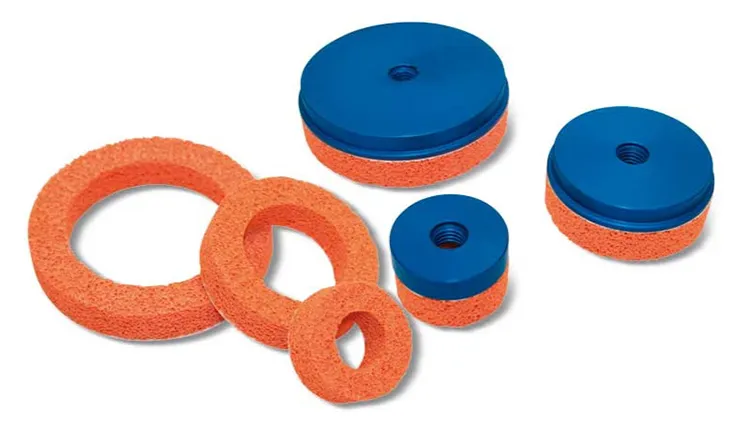
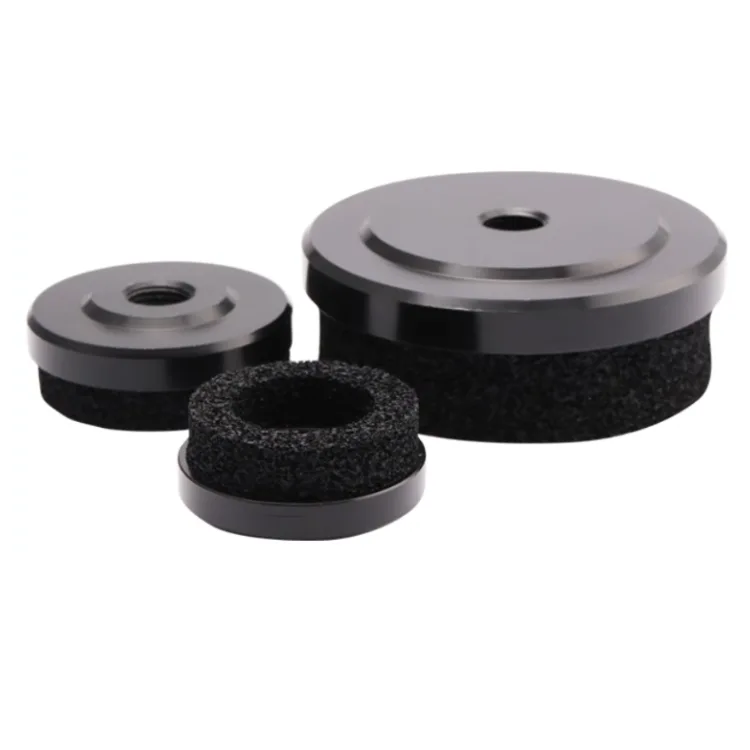
Rough cartons, porous MDF boards, dusty wood surfaces, oily machined parts—these are the real, everyday surfaces my customers deal with. And they’re also the surfaces where standard rubber suction cups simply cannot maintain stable gripping.
In this article, I will walk you through why these surfaces are difficult, how foam suction cups solve them, and what engineering adjustments you must make to ensure stable, reliable performance. If you’re reading this article after my Foam Suction Cup Applications in Industry or Foam vs Rubber Suction Cups: Material Guide, this piece goes a level deeper and focuses purely on surface behavior + vacuum engineering.
1. Why Rough, Porous, Dusty, and Oily Surfaces Cause 80% of Gripping Failures
After supporting hundreds of projects, I’ve observed that most vacuum gripping failures occur not on the product—but on the surface.
Here are the four most challenging categories:
1.1 Rough Surfaces
Examples: Corrugated cartons, textured plastics, sandblasted metal
Problem: Deep grooves and micro-gaps cause immediate vacuum leakage.
Rubber cups fail because they can only seal on a continuous surface.
1.2 Porous Surfaces
Examples: MDF, recycled cartons, kraft boards
Problem: Air flows directly through the material itself.
Even if the cup seals well, the material keeps leaking.
1.3 Dusty Surfaces
Examples: Wood panels, paper dust, machining debris
Problem: Dust prevents proper sealing and clogs filters.
Rubber cups lose grip quickly; foam tolerates dust better.
1.4 Oily or Greasy Surfaces
Examples: Automotive parts, machined components
Problem: Oil film breaks sealing integrity and increases slip risk.
Surface & Issue Summary Table
| Surface Type | Failure Cause | Why Foam Works Better |
|---|---|---|
| Rough | Micro-gaps | Foam fills gaps & textures |
| Porous | Airflow through material | Foam compensates via high-flow systems |
| Dusty | Particles disrupt seal | Foam tolerates contamination |
| Oily | Oil film + slip | Foam increases contact area & friction |
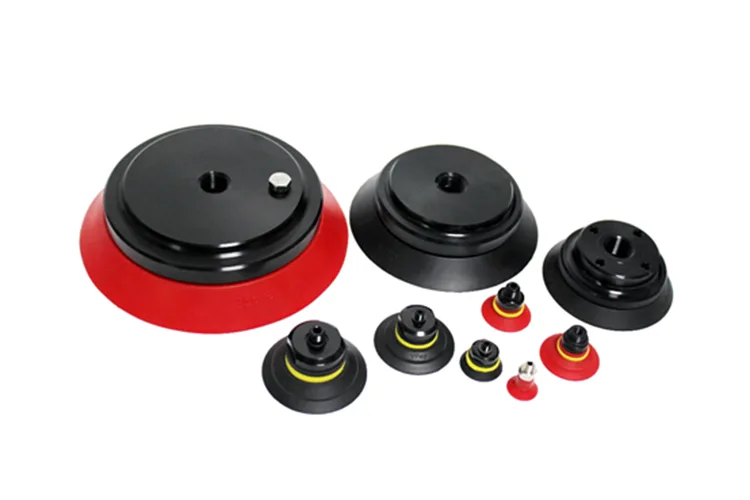
2. Why Standard Rubber Cups Cannot Handle These Surfaces
Rubber cups rely on smooth, non-porous, non-contaminated surfaces. When transferred to real production environments, they fail because:
2.1 They Need a Perfect Boundary Seal
Any micro-gap breaks the seal instantly.
2.2 They Cannot Adapt to Height Variation or Curvature
Rough cartons, bowed wood panels, irregular plastics—rubber cannot compensate.
2.3 Dust and Oil Completely Disrupt Rubber Sealing
A thin layer is enough to cause slippage.
2.4 Rubber Systems Use “Low Flow” Vacuum
This works on glass and metal—but fails on porous surfaces.
➡ For structural comparison, see:
Foam vs Rubber Suction Cups: Material Guide
3. How Foam Suction Cups Solve These Surface Problems
Foam cups succeed not because they create a perfect seal—but because they allow controlled leakage, paired with high airflow to maintain holding force.
3.1 Micro-Gap Sealing (the biggest advantage)
Foam compresses into surface textures—creating a uniform seal even on heavily grooved surfaces.
3.2 Conformity to Curved and Irregular Shapes
Foam adapts to height variations that rubber cannot compensate for.
3.3 High Contact Area = Reduced Marking
Ideal for coated cartons, glossy prints, delicate plastics, coated glass.
3.4 Designed for “High Flow + Controlled Leakage” Vacuum Logic
Foam cups work with higher airflow, not higher vacuum levels.
➡ If you’re choosing between foam types, see:
How to Select the Right Foam Suction Cups
4. Vacuum Engineering Adjustments (Critical for Success)
Foam suction cups will not perform well if used with the same vacuum settings as rubber cups. Below are the adjustments I always recommend:
4.1 Increase Flow, Not Vacuum Level
Foam cups do not achieve “deep vacuum”—they stabilize through airflow.
Best practice:
Use high-flow ejectors or pumps (not deep-vacuum devices).
4.2 Always Use Filters—Dust & Oil Require Different Types
Dusty environments:
• Fine inline filters
• Regular cleaning intervals
Oily environments:
• Oil-resistant filters
• Condensation traps
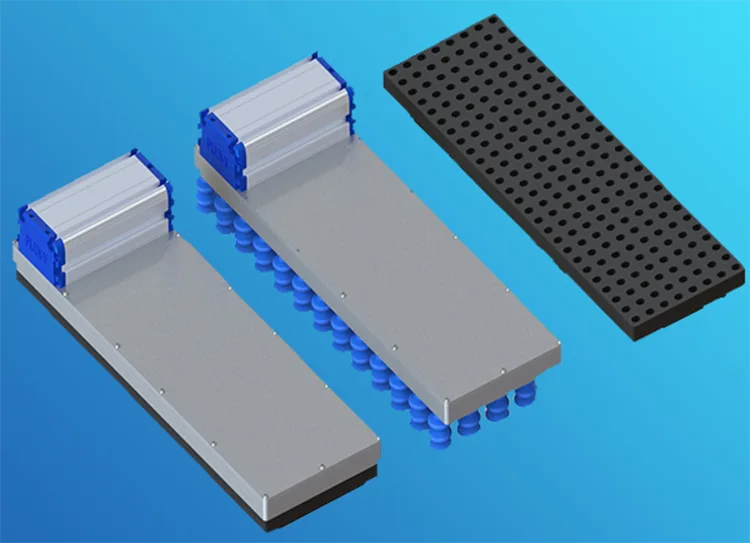
4.3 Manifold Design for Multi-Cup Systems
Common mistakes:
• Long branch lines
• Starved end-cups
• Imbalanced distribution
Solutions:
• Balance manifold ports
• Add flow restrictors if needed
4.4 Hose Length & Internal Diameter (ID) Optimization
Key rules:
• Shorter is always better
• Larger ID improves vacuum response
• Avoid sharp bends and kinks
Foam cups work best when vacuum response time is fast.
4.5 Cup Diameter: Apply the 20% Oversize Rule
Because rough/porous surfaces leak, you should use:
Cup diameter ≥ 20% larger than smooth-surface calculations.
➡ This rule is explained in detail in Article How to Select Foam Suction Cups: Size, Hardness, Material and Vacuum Design Basics
5. Real Cases From My Customers
Below are real, anonymized mini-cases that reflect typical customer issues:
5.1 Rough Cartons in E-Commerce Logistics
Problem: Constant drop-offs using rubber cups
Solution: Medium-soft NR foam + high-flow pump
Result:
✔ 92% reduction in drop failures
✔ Faster cycle stability
5.2 MDF Wood Panel Handling in Furniture Production
Problem: Dust + porosity causing slippage
Solution: Medium-density foam + filter upgrade
Result:
✔ Stable transfer
✔ Longer cup life compared to rubber
5.3 Oily Machined Metal Parts in Automotive
Problem: Rubber cups slipping
Solution: NBR foam with micro-textured surface
Result:
✔ Reliable grip despite oil film
✔ Lower maintenance on vacuum system
5.4 Coated Glass Panels
Problem: Micro-textured surface, marking issues
Solution: Fine-cell silicone foam cups
Result:
✔ Non-marking
✔ Stable, uniform contact
➡ Related insights:
Troubleshooting Guide
6. Quick Engineer Checklist
Use this when evaluating a new project:
□ Identify surface type (rough / porous / dusty / oily)
□ Choose foam hardness correctly
□ Increase cup diameter (20% rule)
□ Increase vacuum flow capacity
□ Add proper filters
□ Shorten hoses + increase internal diameter
□ Run dynamic movement tests
7. When Foam Alone Is Not Enough
Even foam cups have their limitations. Here are scenarios requiring extra care:
7.1 Extremely Porous Materials (e.g., low-density MDF)
Solution:
• Higher density foam
• Thicker foam layer
• Very high-flow vacuum systems
7.2 Heavy Oil Films
Solution:
• NBR foam
• Pre-cleaning
• Surface-textured foam options
7.3 High-Speed Pick-and-Place
Solution:
• Hybrid bellows + foam structures
• Adjust airflow for response speed
➡ Detailed material recommendations in:
Foam vs Rubber Suction Cups: Material Guide
8. Final Thoughts
Foam suction cups outperform rubber on rough, porous, dusty, and oily surfaces—but only when:
✔ You choose the correct foam hardness & material
✔ You size correctly
✔ You tune the vacuum system for flow rather than deep vacuum
If you are currently dealing with drop-offs, slipping, or inconsistent pick-up, this article should help you identify the source of the problem and implement the right upgrades.
Need Help Choosing the Right Foam Cup?
As a supplier experienced in vacuum gripping across automotive, packaging, electronics, furniture, and automation industries, I can help you evaluate your surfaces and application needs.
Share your part photos, surface details, and vacuum parameters — I’ll recommend the correct foam hardness, thickness, and vacuum setup.
👉 Product page:
https://www.kinsoe.com/product/custom-foam-suction-cups/